Two separate problems get solved together on most calls: removing what got in, and installing a barrier so it stays out. A live bird or a raccoon in the flue needs removal before any cap goes on, sealing an animal…
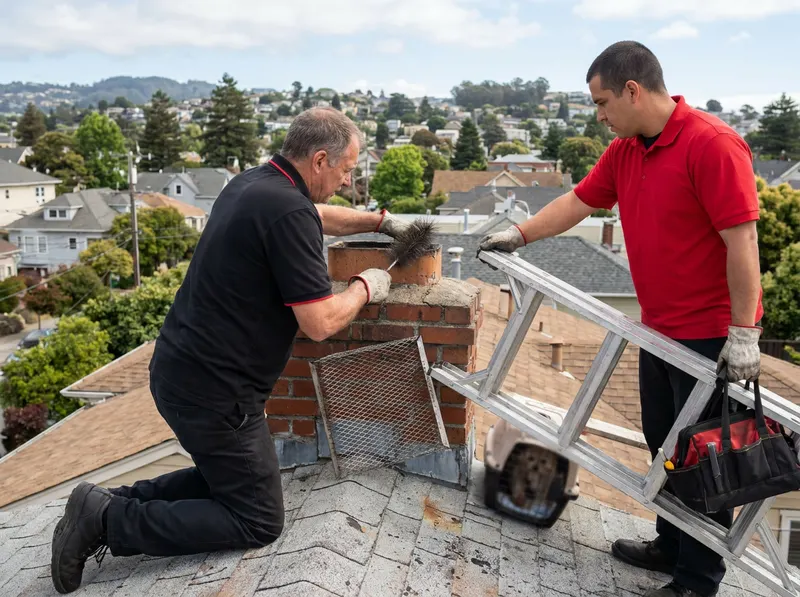
Two separate problems get solved together on most calls: removing what got in, and installing a barrier so it stays out. A live bird or a raccoon in the flue needs removal before any cap goes on, sealing an animal inside creates a decay and odor problem. Nesting season for chimney swifts and starlings peaks spring through midsummer, and a packed nest blocks draft, which is why a smoking fireplace in a Rockridge or Temescal bungalow often traces back to a nest, not a dirty flue.
The order of work is straightforward. First, the technician confirms whether an animal is live or the nest is abandoned. Second, the nest is removed and the flue is cleared of twigs, droppings, and creosote from the smoke chamber down to the smoke shelf. Third, the flue interior gets a Level 1 inspection per NFPA 211 to check for cracks or blockage left behind. Fourth, the flue opening is measured and a spark arrestor is fitted. A 316 stainless mesh animal spark arrestor is the corrosion-resistant option, 316-grade steel holds up to the salt air and persistent fog common in the Oakland Hills and Montclair far better than galvanized or aluminum caps that rust within a few years.
Sizing decides which cap fits. A stock cap works on standard round or square clay flue tiles; an oddly sized, oversized, or multi-flue crown in older Piedmont Avenue and Adams Point homes usually needs a custom chimney animal guard fabricated to the crown. The trade-off is simple: a stock cap installs same-visit and costs less, while a custom fabricated cap takes a few days to build but is the only reliable way to keep raccoons out of a nonstandard opening. Raccoons pry at weak edges, so a custom guard is bolted and screened rather than friction-fit.
Mesh gauge matters for what you are keeping out. The Chimney Safety Institute of America notes spark arrestor mesh openings are generally specified at 3/4 inch or smaller to catch embers and block birds; that same 3/4-inch mesh stops most birds and squirrels, while raccoon exclusion relies on a sturdy welded frame and secure anchoring, not just mesh size. A cap serves two functions at once, an ember spark arrestor and an animal screen, so one install covers wildfire ember intrusion and wildlife.
One clarification prevents a common misunderstanding: removing a nest is not the same as a full chimney cleaning. Nest removal clears the obstruction; a full sweep removes creosote glaze from the flue walls. If the chimney hasn't been swept and you want it usable before winter, ask to clean out the chimney in the same visit. Where a nest hid a cracked flue tile or damaged crown, a Level 2 inspection with a camera is the next step before the fireplace is used again. A free on-site estimate confirms sizing and the exact cap needed before any work starts. Service covers Rockridge, Montclair, Temescal, Grand Lake, Dimond District, Fruitvale, Laurel, and the rest of Alameda County.
Every job gets a firm, written price after a free on-site visit.
Tell us about your animal removal & spark arrestor job in Oakland and we'll send a clear, written quote, usually the same day.
 Flueshield Chimney Sweep